
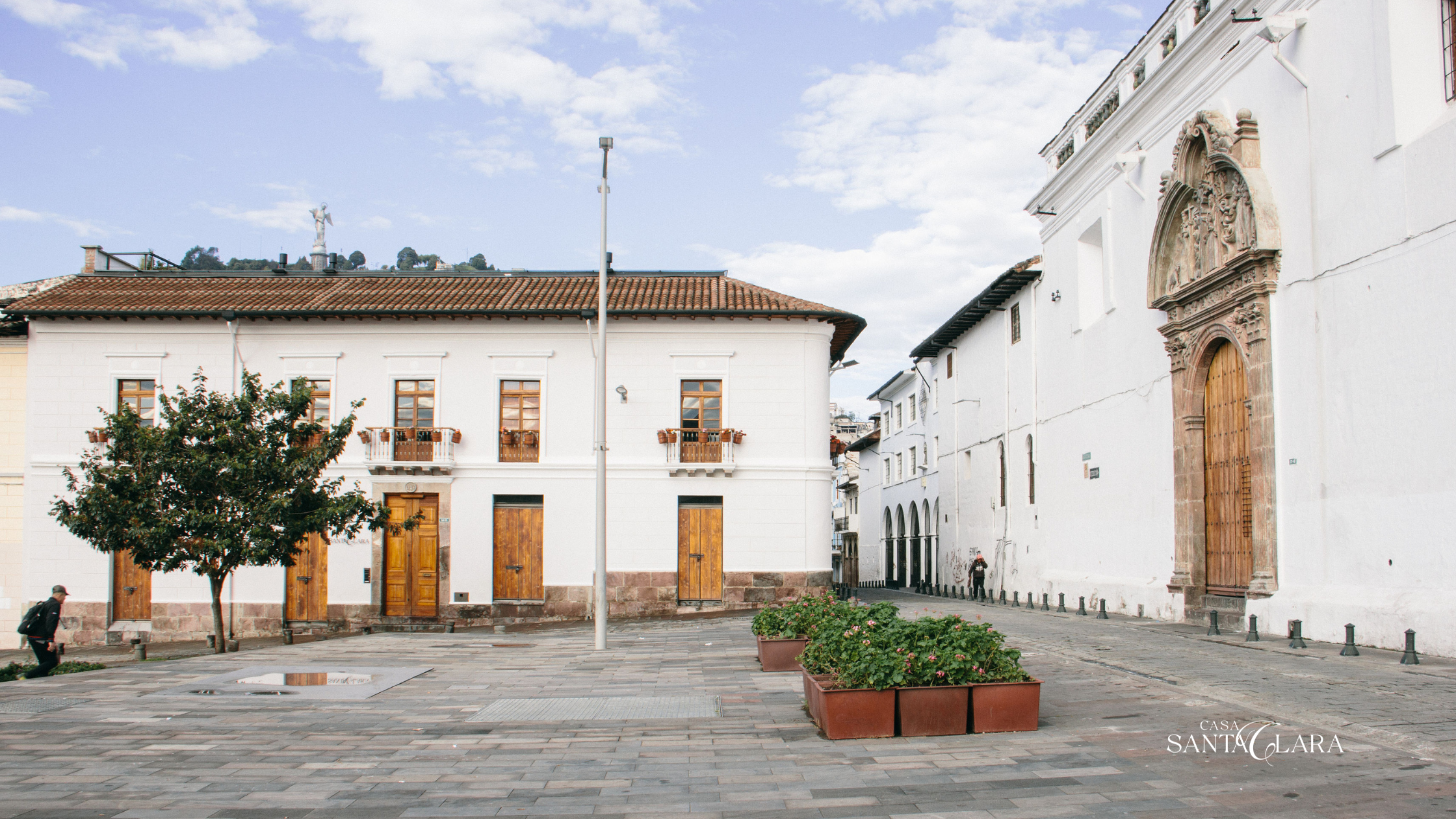
Plaza Santa Clara: 400 Years on One Quito Square
A colonial plaza in Quito's UNESCO Old Town where cloistered Poor Clare nuns still live next door. Four centuries of layered life on one quiet square.
Read more
%201.svg)

.svg)
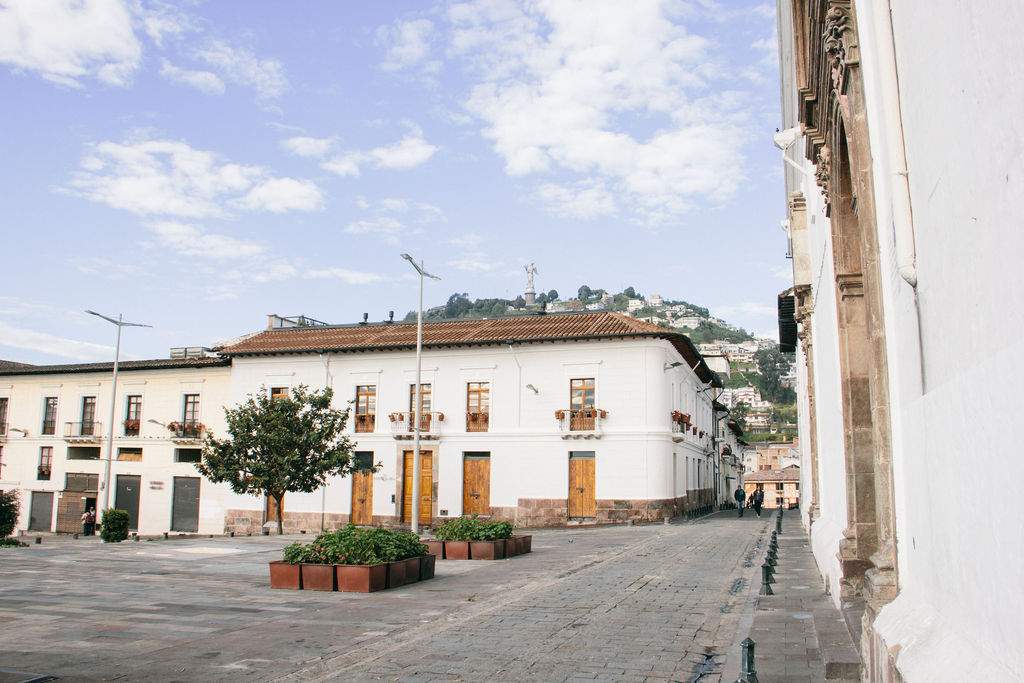
The question comes up in every travel forum, every pre-trip group chat, every late-night search before booking a flight to Ecuador: is it safe to stay in Quito's Historic Center?
The short answer is yes — with the same awareness you'd bring to any major Latin American capital. The longer answer is more interesting, because it says something about the gap between perception and place.
Quito's Historic Center is a UNESCO World Heritage Site — the first city in the world to receive that designation, in 1978. It is not a forgotten quarter. It is a functioning, restored, actively policed urban center where hundreds of thousands of people live and work every day.
During the day, the streets around Plaza Grande, Iglesia de San Francisco, and La Compañía are full of locals, students, vendors, and visitors. Police presence is consistent and visible, particularly in the main plazas and along the principal walking routes. Ecuador's government has expanded security measures in tourist zones over the past two years, and the results are tangible — especially in the Historic Center, where cultural investment and restoration have accelerated.
The primary concern, as in most historic city centers worldwide, is opportunistic petty theft: pickpockets in crowded areas, distracted tourists with phones out. This is not unique to Quito. It is Florence, it is Lisbon, it is Mexico City. Standard urban awareness — crossbody bag, no flashy jewelry, eyes up — goes a long way.
This is where nuance matters. The Historic Center is quieter after dark than neighborhoods like La Floresta or González Suárez, which have more active nightlife. Walking the main plazas in the early evening is perfectly normal. Walking alone through poorly lit side streets at midnight is not recommended — just as it wouldn't be in most cities.
The practical solution is simple: stay in the Centro itself. When your hotel is steps from the places you want to see, you don't need to navigate unfamiliar streets late at night. You walk out your door and you're already there.
Some travel guides suggest staying in the Mariscal or northern Quito and visiting the Historic Center as a day trip. This works, but it means you miss the Centro at its most compelling — early morning light on colonial facades, the quiet of Plaza Santa Clara before the city wakes, the sound of the monastery bells next door.
There is a particular quality to staying inside a neighborhood rather than visiting it. You develop a rhythm. You recognize the woman who opens her shop on the corner. You notice which café fills first. The Historic Center reveals itself to those who sleep there, not just those who pass through.
At Casa Santa Clara, a five-suite house on Plaza Santa Clara, this proximity is the point. All spaces are exclusively for guests — no public restaurant, no street-level lobby open to passersby. The experience is closer to staying in a private residence than checking into a hotel. That model, by design, adds a layer of personal security that larger, public-facing properties cannot offer.
A few things that experienced Quito visitors already know:
Use registered taxis or ride apps for any trip after dark. It is preferable to call an authorized taxi company or look for cars that have clear taxi company logos. Keep your phone in your pocket when walking through crowded areas. Stay on the main routes between plazas. And if you have questions about where to go or what to avoid, ask your hotel, local knowledge is the most reliable safety tool there is.
For more on what to expect when visiting, see our frequently asked questions.
Ecuador welcomed 1.68 million international tourists in 2025 — an 8.72% increase over the previous year. More than 676,000 of those visitors arrived through Quito. The city was named Wanderlust Destination of 2025 by one of the world's most respected travel publications. Travelers are not avoiding Quito. They are choosing it, in growing numbers, because the experience justifies the trip.
The Historic Center is the reason most of them come. And for those who stay in it — not just visit it — the city opens differently.
.svg)


%201.svg)
%201.svg)