
Is a Boutique Hotel Worth the Price?
Is a boutique hotel worth the price? An honest look at the economics of attention — what you're paying for and what you're not.
Read more
%201.svg)

.svg)

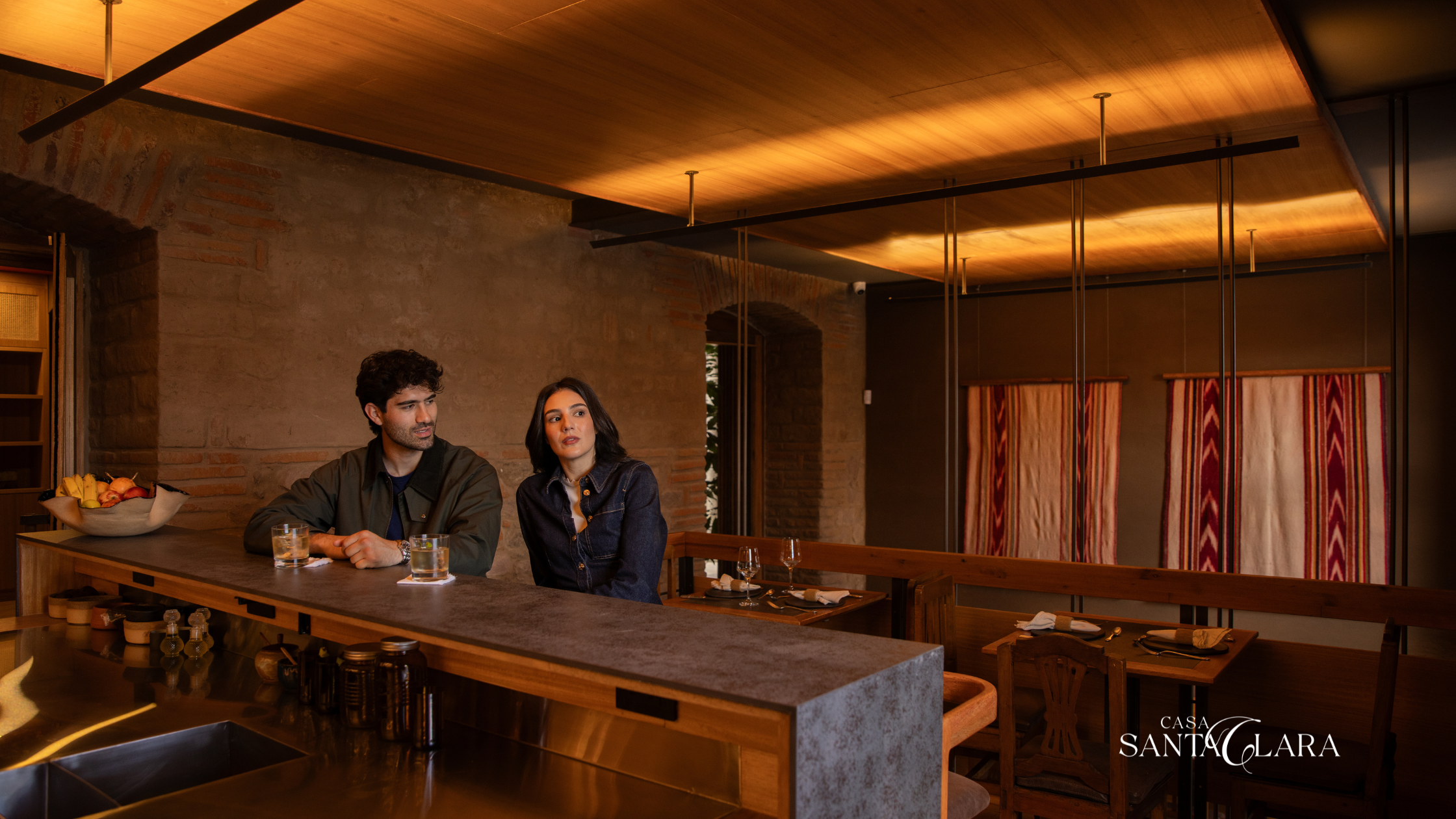
It's 7 a.m. on your second morning. You descend the restored wooden stairs of Casa Santa Clara alone — no sound of room-service carts in the corridor, no other guests queuing for coffee, no staff member hurrying past with fresh towels for a stranger. The courtyard is yours. The lounge — an original vintage record player, shelves of books, colonial stonework — is waiting. The dining room table is set. And because there are only five suites in this house, no one else on earth can access any of it.
What does "exclusive for guests only" actually mean? It means the entire property — every room, every courtyard, every moment — exists only for the people sleeping there. And it changes almost everything about how you move through an exclusive boutique hotel in Quito's historic center.
The phrase appears in thousands of marketing descriptions. It's supposed to signal prestige, privacy, a certain distance. But most people hear it and think of nothing in particular. They picture a locked gate, perhaps, or a stern receptionist. They don't imagine what daily life becomes when 100% of a property's physical space — lounge, bar, rooftop, dining room, restored colonial facades — exists entirely for the people staying there.
An exclusive boutique hotel in Quito isn't just smaller. It operates under a fundamentally different logic.
When a hotel reserves every room, every common space, every moment of guest-facing hospitality for its own residents, the rhythm transforms. There's no calculation about "peak hours" or "guest density." There's no performance in the hospitality — no staff pivoting between publicly accessible restaurant operations and overnight guest service. There's no one else.
In a traditional hotel, even a carefully designed one, you're sharing infrastructure. The restaurant operates for drop-in diners at 7 p.m., so breakfast service must be brisk. The bar serves locals in the evening, so the quiet spaces close at dusk. These aren't sins — they're the economics of hospitality at scale. But they create a rhythm that doesn't belong to you.
In a five-suite property where guests are the only humans the house serves, time reorganizes itself. Breakfast appears when you're ready, not when the kitchen opens. The lounge stays lit at 11 p.m. — a record spinning, someone in Suite 3 reading — because no one needs the space for anything else. The bar exists because three guests wanted Pisco after an evening walk through the plaza, not because the hotel needs to hit beverage targets. The courtyard, facing the 16th-century Santa Clara Monastery on the Plaza Santa Clara, becomes your private garden in the middle of Quito's most storied neighborhood.
At sunset, the rooftop and the views are yours to enjoy.
This is the difference between knowing your name and being registered by it. Staff in five-suite properties operate from memory and attention, not from standard operating procedures. They know you take coffee at 7:15, not 8:00. They know you prefer the lounge armchair by the record player to the sofa. They know, because they're paying attention to five people, not fifty.
Casa Santa Clara's colonial architecture — restored, not franchised — makes this point physically. It's a 19th-century home on the Plaza Santa Clara in Quito's UNESCO Historic Center. The courtyard isn't a feature added to a hotel structure; it's the heart of a house that happened to become one. The walls hold pieces from the Quito School of Art. A quiet lounge offers books and an original vintage record player — the kind of detail that survives because the house was restored with intention, not inventory. The restoration itself earned the Premio al Ornato, Ecuador's most prestigious architecture prize — recognition not of scale, but of care.
A hotel built for 150 rooms in Jakarta and 150 rooms in Lima looks identical. This house will never be replicated. It can't be. It's already here, already restored, already particular. That particularity — that rootedness in a specific street, a specific monastery view, a specific architectural moment — is what exclusivity actually costs. Not the thread count. The irreproducibility.
Quito itself has become more visible to the intentional traveler. International visitor numbers grew 14.75% in 2025 alone. But the city's four and five-star boutique market still operates at roughly 50% occupancy, meaning rooms exist for people who want them — not for people trying to fill beds. The average guest stay is 2.8 nights. People aren't visiting for a week. They're arriving to know one specific place.
The promise of "exclusive for guests only" breaks down into something simple: you're not managing anyone else's experience. You're not waiting for a table because the restaurant has other priorities. You're not competing for the best seat in the lounge. You're not performing your leisure.
This matters more if you've spent twenty years in hotels where you felt you were being managed alongside 400 other people. It matters less if you've never noticed. But once you've spent a morning in a restored colonial house where every door, every courtyard corner, every evening ritual exists because five people are staying there — not because a corporate operations manual says so — something clarifies.
Exclusive doesn't mean cold. A five-suite hotel isn't a fortress. It's a house that takes you seriously, because there's room to. The Quito School of Art collection on the walls isn't performance. The lounge at midnight — a record playing, a book open — isn't a feature. The kitchen adapting breakfast to what you actually want to eat isn't hospitality theater. It's just how a house works when it has five guests instead of five hundred.
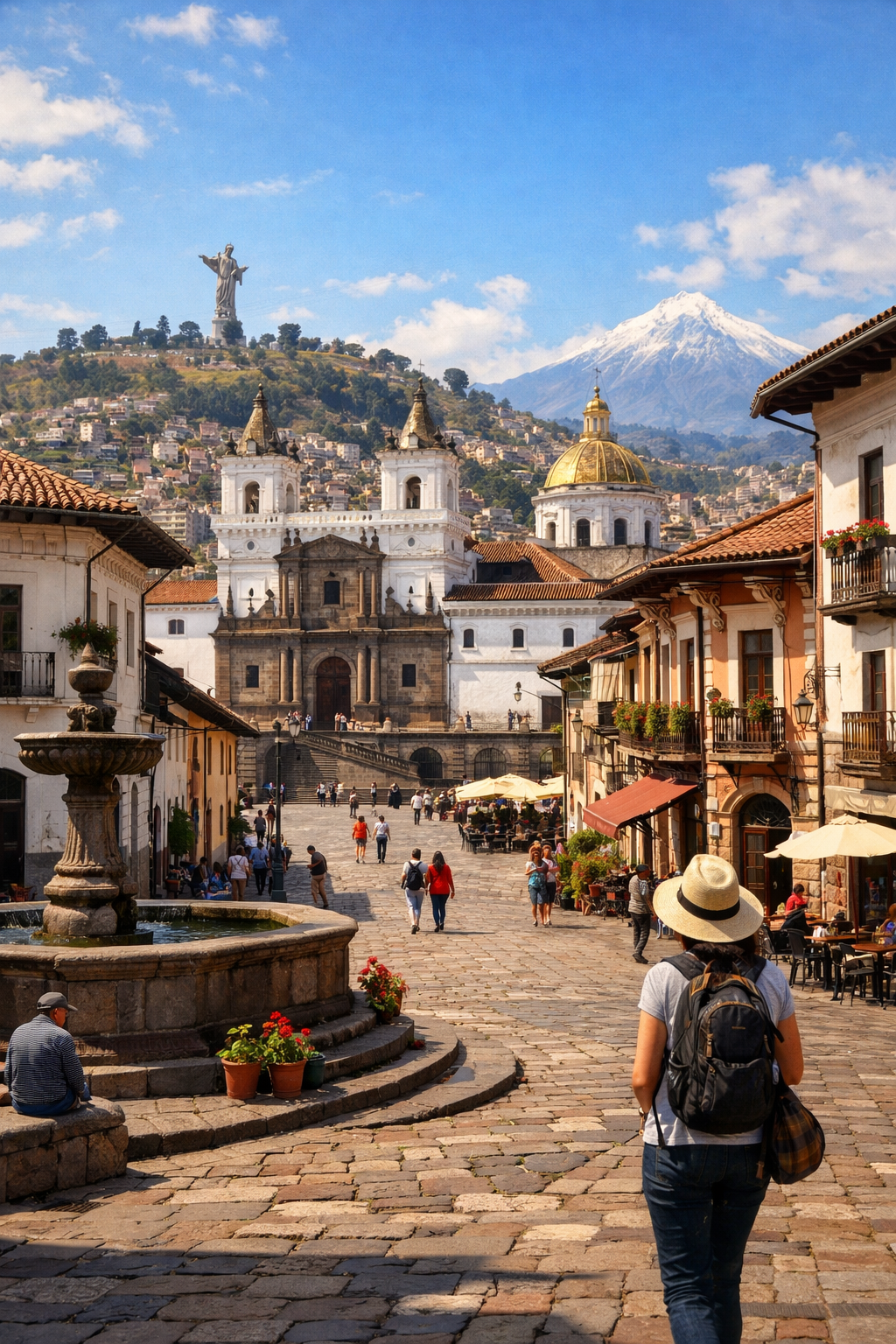
And above it, from the rooftop, the city reveals another scale — domes, towers, and the layered horizon of Quito’s historic center.
The Plaza Santa Clara — with the Iglesia de San Francisco, La Compañía, the Museo del Alabado, and the narrow restored streets of La Ronda all within walking distance — becomes an extension of where you're staying. Because you're not moving through a hotel district. You're moving through a neighborhood where you're rooted, even briefly.
On your last morning, something will strike you: you didn't once feel like a guest in the formal sense. You felt like someone staying in a house. The staff knew your rhythm. The spaces adapted to how you actually moved through them. The coffee was right. The lounge never emptied out because someone else had booked it. The courtyard never felt crowded.
That's what exclusive for guests only means. Not that you're paying more for less access. It means the entire property works from the assumption that you matter. Not in aggregate. You. Specifically.
That changes the whole thing.
.svg)

%201.svg)
%201.svg)